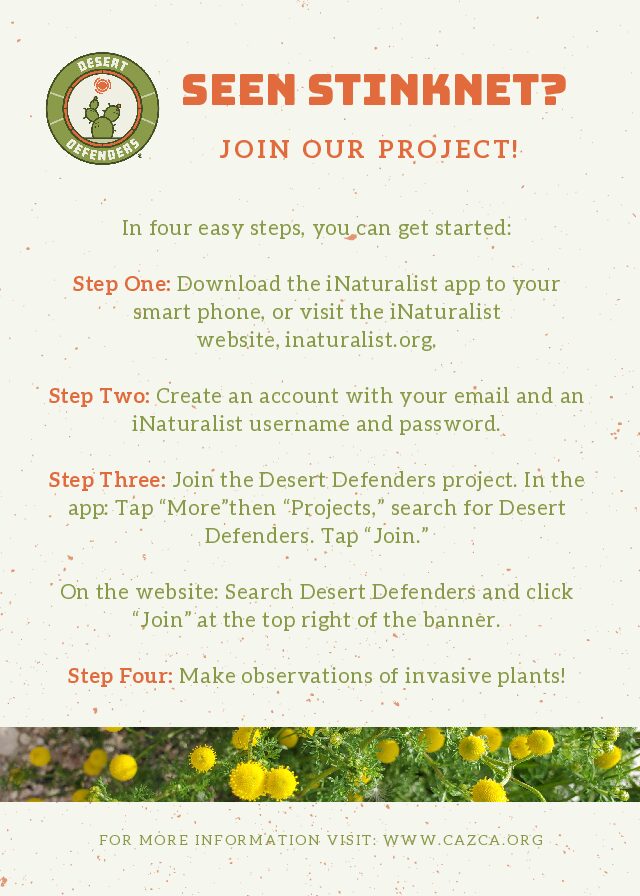
Desert Defenders iNaturalist Instructions
Educational material on how to use iNaturalist to upload invasive species
Educational material on how to use iNaturalist to upload invasive species

A 2 page flyer on fire in the desert and how to live fire safe.
An 8 page presentation on social trails by Taylor Riske.
A 9 page presentation on wildlife connectivity in the Central Arizona region.
Do you communicate with your communities about the environment, sustainability or natural systems? You’re an environmental educator! Listen to the discussion with the Arizona Association of Environmental Education about Environmental Education (EE) in Arizona! While EE has a strong presence in K-16 classrooms statewide, EE can happen in lots of different places beyond the formal classroom. We talked about how the work you do can intersect with the work educators do for the environment. We also discussed the definition of environmental education, its role in Arizona and the intersection of equity and inclusion and environmental justice.
You have heard of invasive plants and you have heard of wildfire, but have you heard of invasive plants as a ‘biological wildfire’? Wildfire and invasive plants have more in common than you might think, from their impact to their management. Join us to hear from Willie Sommers, Invasive Plant Program Coordinator with the Arizona Department of Forestry and Fire Management (DFFM). He will discuss weeds as a ‘biological wildfire’, general considerations for wildfire prevention and recovery for burned areas, and explore the the DFFM Invasive Plant Program.
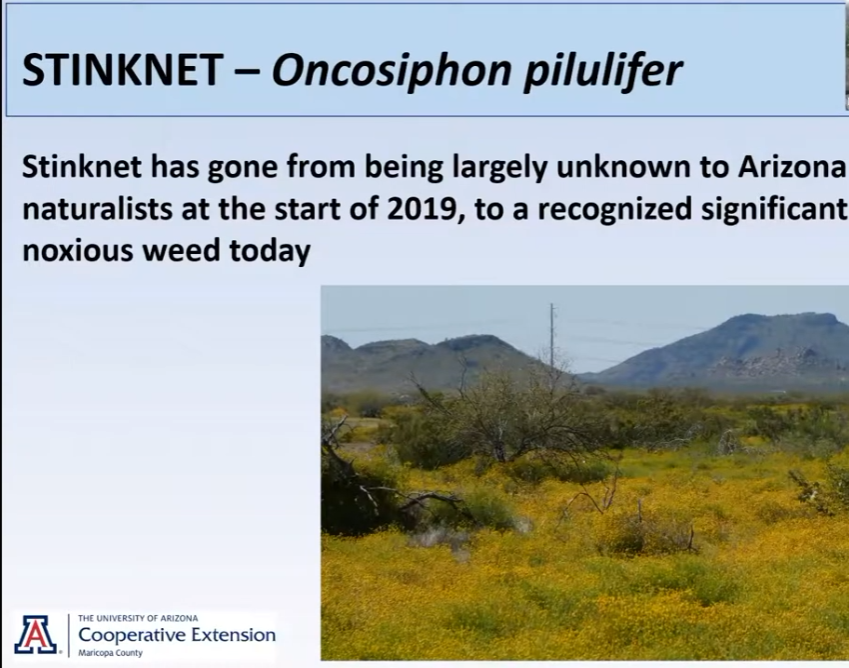
Stinknet (Oncosiphon pilulifer) has certain made its mark in Arizona and is a recent (2020) addition to the Arizona State Noxious Weed List. Join us for our first speaker series of 2021 with Michael Chamberland from the Maricopa Cooperative Extension Office as we explore this noxious weed. The invasive threat of stinknet is becoming widely recognized, including its potential to fuel wildfire and harmful effects to human health.
Learn about invasive plants of the Sonoran Desert and the impacts they can have on native ecosystems.
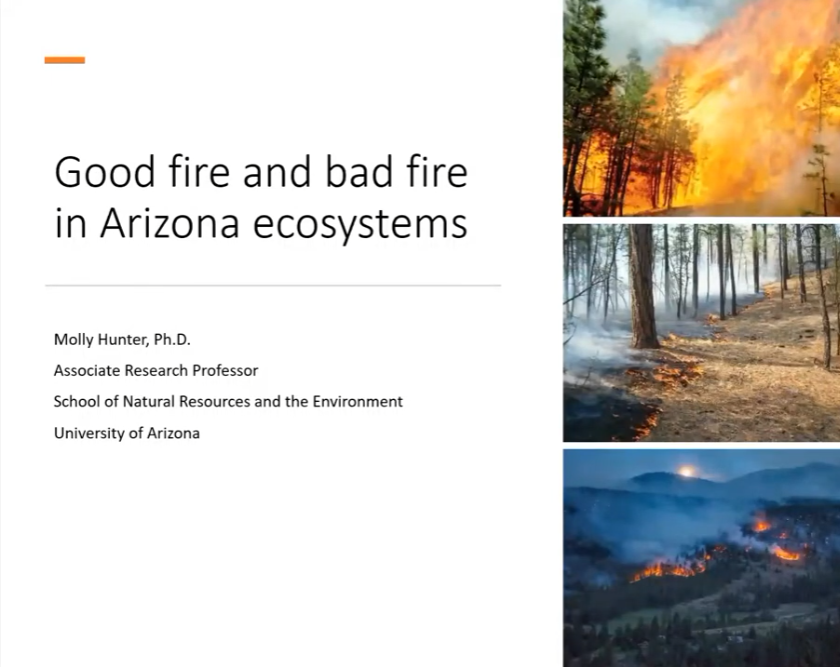
Join us and the Metro Phoenix EcoFlora for this talk with Dr. Molly Hunter to learn about the changing role of fire in southwestern habitats. We live in such a unique place, and as fire become a more common facet of our lives it’s important we understand their role and their impact on our deserts. Dr. Hunter is an Associate Research Professor at the University of Arizona. She serves as the primary science advisor for the Joint Fire Science Program with the U.S. Forest Service and Department of Interior that funds scientific studies to inform wildland fire management. Dr. Hunter also serves as Research Manager for the Southwest Climate Adaptation Science Center

Recent Comments